
FF (Fertilised Futures) — PHASE 4
What would happen if natural human reproduction was out of order and the Assisted Reproductive Technologies (ART) of PHASE 4 compellingly available?
FF — PHASE 4 is a design fiction scenario based on extensive research into human reproductive sciences. This short film extrapolates PHASE 4 of the diagrammatic reasoning of REPRO 2090. This short film explores a potential emergence of new rituals and understanding of sensuality, which contrasts natural human reproduction as a romantic-whimsical tale from the past.
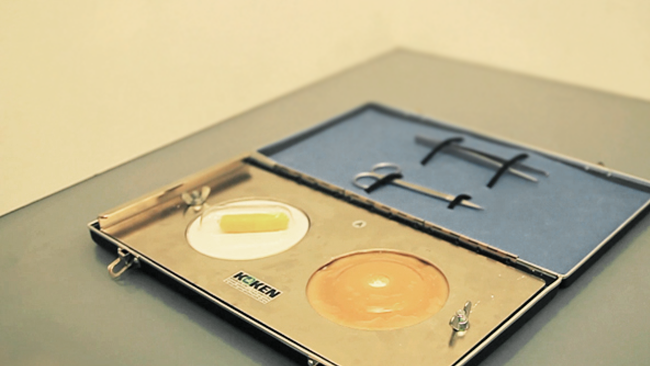
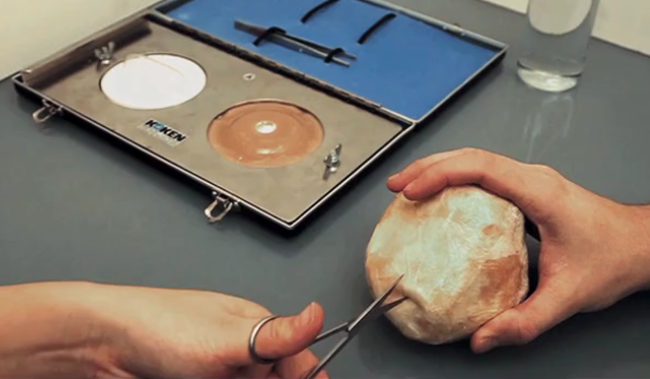

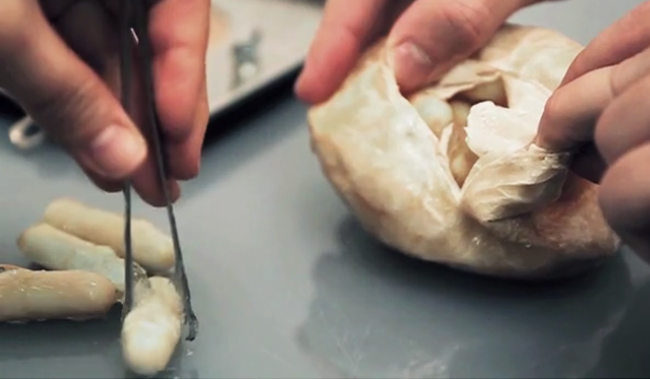
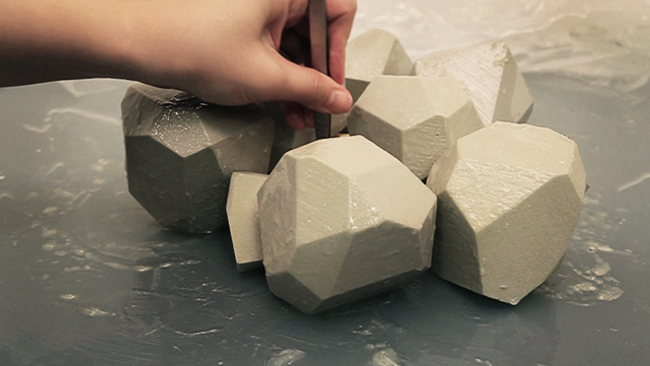
Research suspects unknown long-term consequences to excessive application of artificial reproduction techniques (ART), caused by the manipulation of gametes and embryos [1] [2]. The conversations with Prof. Dr. Brosens suggested that a likely extreme scenario — apart from immediate social and health consequences — might be total human infertility and full dependancy on ART, as consequence of its extensive and carefree application. The film showcases this new reality by offering a short glimpse into how a future couple might experience this turning point, when technological support turns into dependence: a not so distant future when natural bodies fail, but the urge for bonding and unique connection remain as abstract, but deeply routed desire. When infertility is the new normal, outsourced, external fertilisation processes, such as FF — Fertilised Futures begin to replace the most intimate of human acts:
- The couple receives an optimised genetic kit of their own biological material via post.
- To perceive and mark the creation of their child as unique moment of their lives, they are following a predetermined ritual, which serves as bonding experience.
- This skeuomorphic ritual of 'random' selection, performed by the couple, mimics the sensation of empowerment and intimacy that they have been stripped of. The genetic material of the two has been computationally optimised in a laboratory well in advance.
- The ritual serves hereby as celebratory and complimentary well being- placebo, provided by the FF — Fertilised Futures corporation.
The film intends to provide a tangible experience on how a former deeply human event in our lives could turn – technologically transformed – into a rational, somehow sobering protocol.
[1] Moster, D., Lie, R. T., and Markestad, T. (2008) Long-Term Medical and Social Consequences of Preterm Birth, In New England Journal of Medicine 2008(359):262-273, DOI: 10.1056/NEJMoa0706475
[2] Thompson, J. G., Kind, K. L., Roberts, C. T., et al. (2002) Epigenetic risks related to assisted reproductive technologies: Short- and long-term consequences for the health of children conceived through assisted reproduction technology: more reason for caution?, In Hum. Reprod. (2002) 17(11): 2783-2786, DOI:10.1093/humrep/17.11.2783
CREDITS
Designed, directed and produced by Veronica Ranner
Actors: John Rainey and Yoonah Nam
Physical film props: Veronica Ranner
SCIENCE ADVISOR
Prof Dr Jan J. Brosens, Former Chair of Reproductive Medicine and Science, Imperial College, London, UK